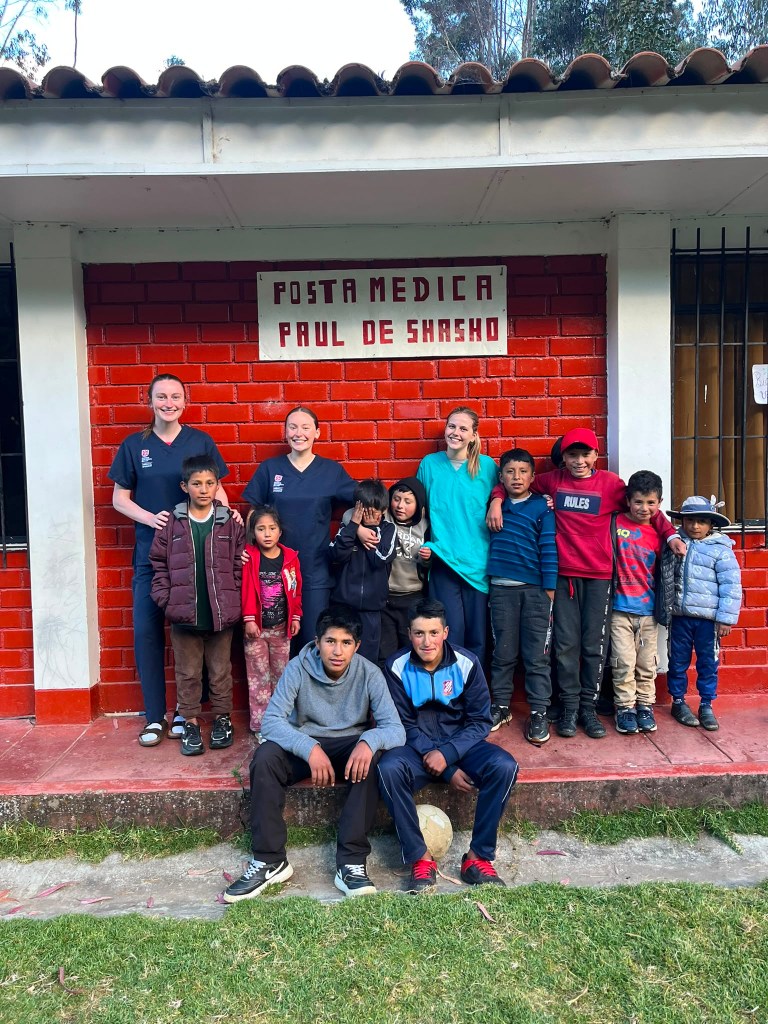
In July 2026 Annie Fitzpatrick, Seren Bergum and Anna Arentsen, medical students at Queens University Belfast, carried out their medical elective at the health post in Quisuar in Peru’s Cordillera Blanca and at Hospital Víctor Ramos Guardia in Huaraz.
Here is Anna’s report of her medical elective experience at the Paul de Shasho medical post in Quishar.
LED Medical Elective Reflection – Anna Arentsen, July 2026
At the end of my 4th year of medical school I was granted the fortunate opportunity to complete a medical placement (elective) in a part of the world and specialty of my choice. I was lucky enough to be able to complete this opportunity with the LED charity at their Peruvian health post, Paul de Shasho medical post. An adventurous, fun-filled and cultural experience. The team here consisted of local nurse Noemi, who spends all year in this community tending to problems, our guide and translator Juan, myself and two of my friends from medical school. The three of us had read about LED charity online and were very keen to be able to take part in a placement with the charity during the summer of 2026, after getting in contact with Val this became a reality!
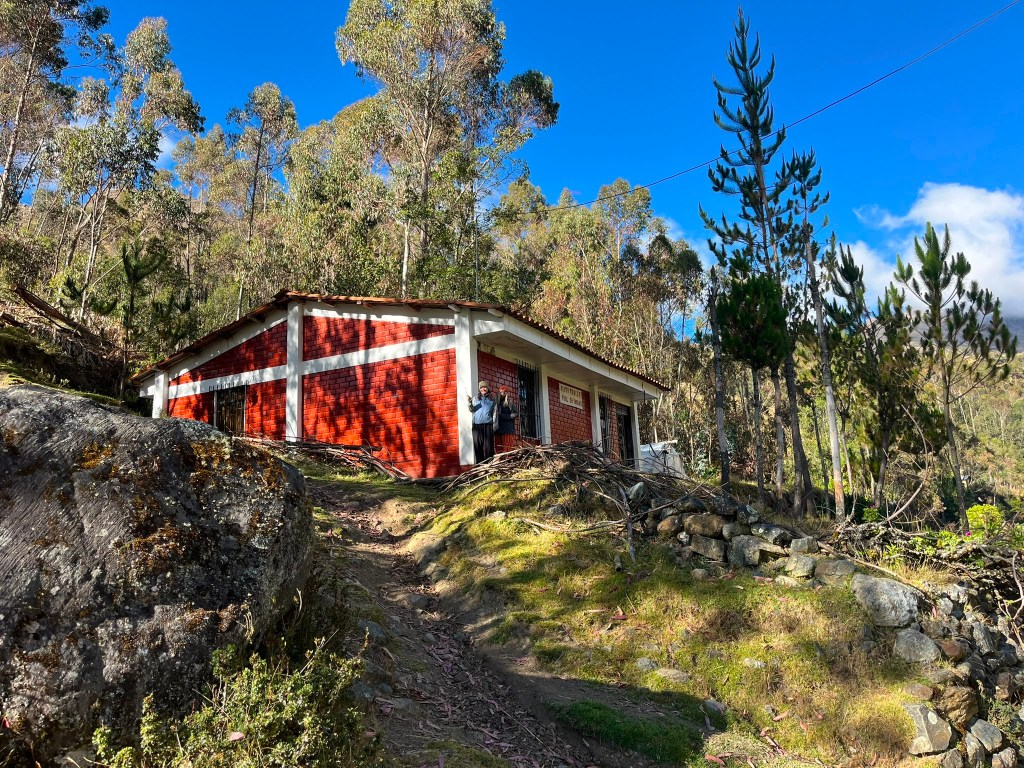
The post here works to support the local community of Quishar with some of their medical needs. The post is stocked with medications donated by volunteers or supporters of the charity, consisting of things like certain antibiotics, pain relief, bandages and prescription glasses. Alongside being an area where medical aid can be received, the post also has a great involvement with the local school in Quishar, with most medical volunteers taking part in English lessons on weekday afternoons (and the occasional football game!). The native language of the local people is Quechua, though Spanish is becoming increasingly prevalent amongst the younger people of the community, who regularly spoke Spanish to one another and were taught in Spanish in the local school. The children were bright and talented individuals who were able to pick up phrases and words in English at impressive speed. The local children will always be a highlight of this incredible trip.
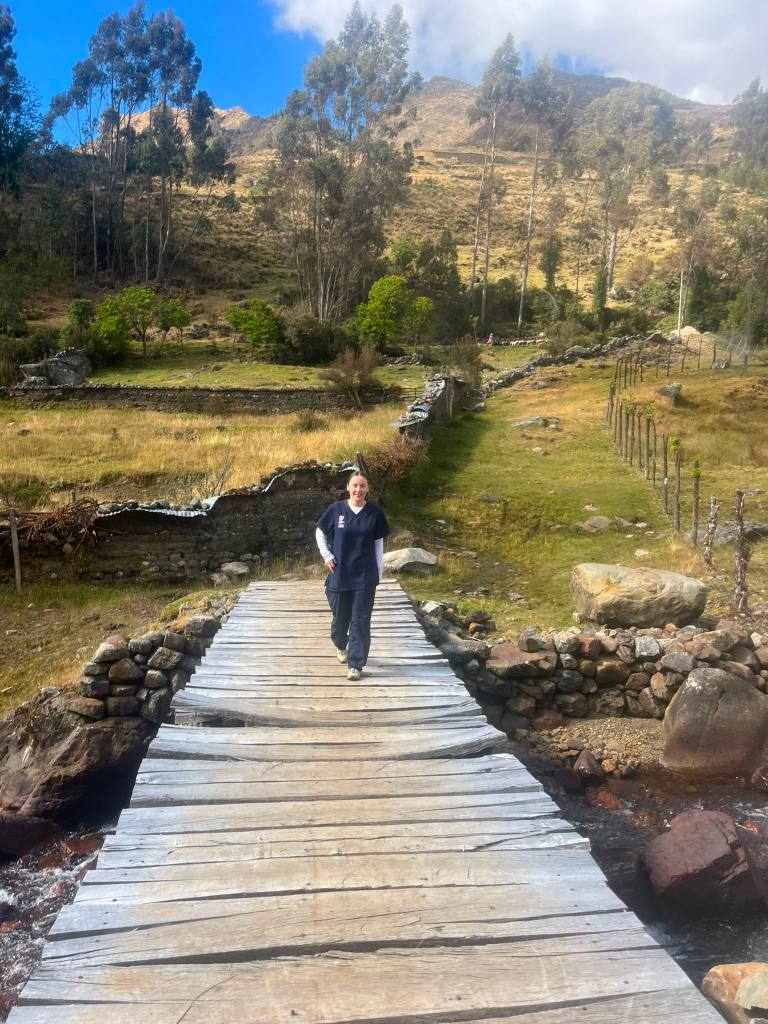
Quishar itself is a remote village situated at an elevation of roughly 3800m in the Andes mountain range, located on the border of the Huascarán national park it is an 8 hour journey from the nearest city of Huaraz to the market town of Pomabamba and a further 2 hour drive on from Pomabamba to Quishar. Quishar’s seclusion only adds to the beauty and exceptional nature of the place, however, it means that its people are heavily reliant on health posts such as the Paul de Shasho post for things like medications, glasses and advice of when to embark on the lengthy journey to the nearest hospital, located in the city of Huaraz. The agriculturally orientated jobs of the local people make journeys like this a rarity and are reserved for emergencies only.
Due to the nature of many people’s jobs in the mountainous environment, problems such as osteoarthritis and cataracts are common as a result of long days spent tending to land under the harsh Andean sun, a lifelong and physically intense day to day. Certain gastrointestinal problems like gastritis, GORD are also commonly seen here. Providing patients with prescription glasses and sunglasses is a clinical experience I will never forget, witnessing first-hand the difference that these can make to the patients’ lives was truly moving, with jobs that rely so heavily on being able to see properly and with patients living for so long without this privilege, it makes an enormous change to the lives of the local people and is something I will always remember and take with me into future practice. We attended some of the local people’s homes during home visits for ailments such as particularly painful arthritis, we were always met with a warm, welcoming environment by patients which only added to the village and its remarkable surroundings.
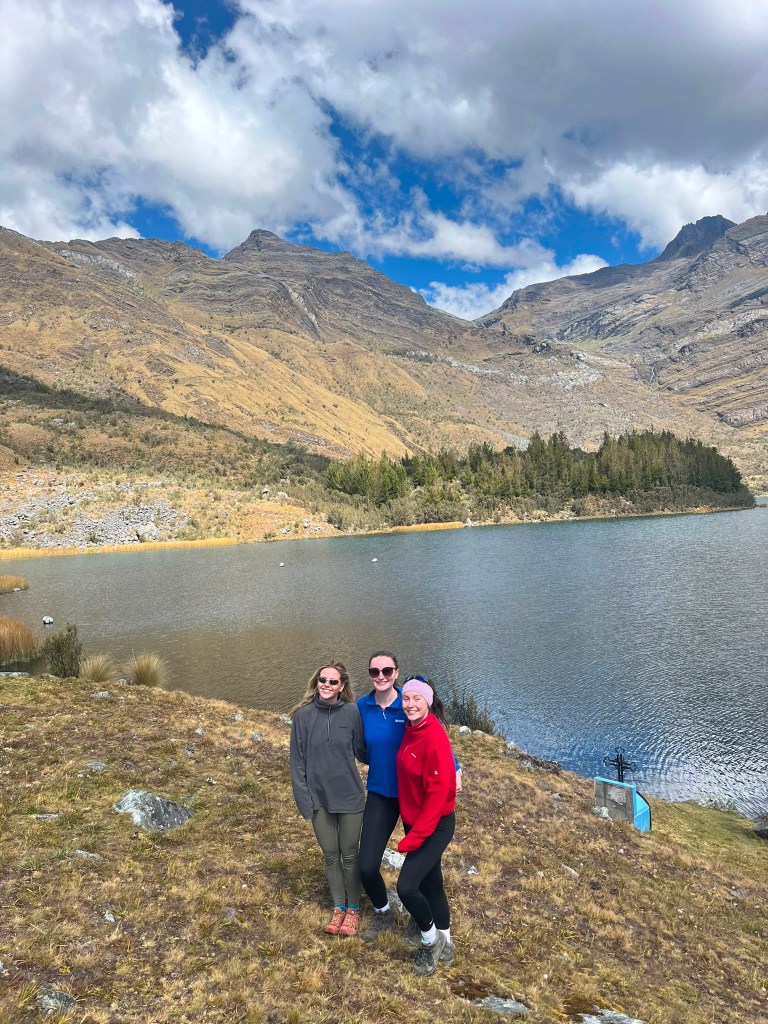
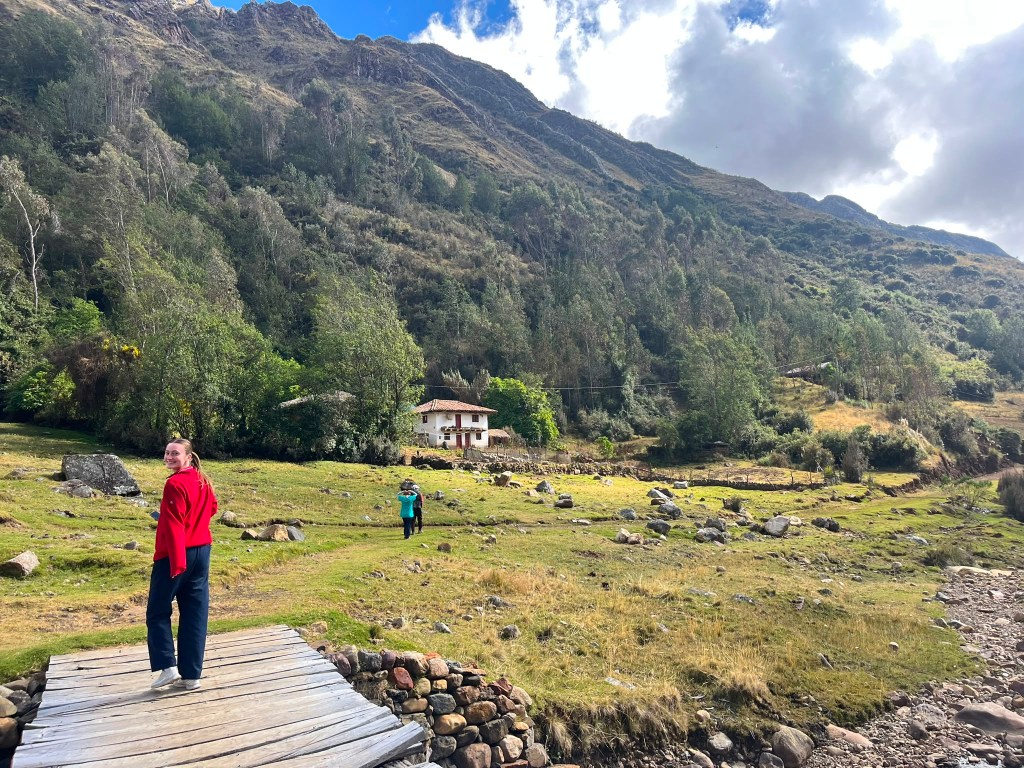
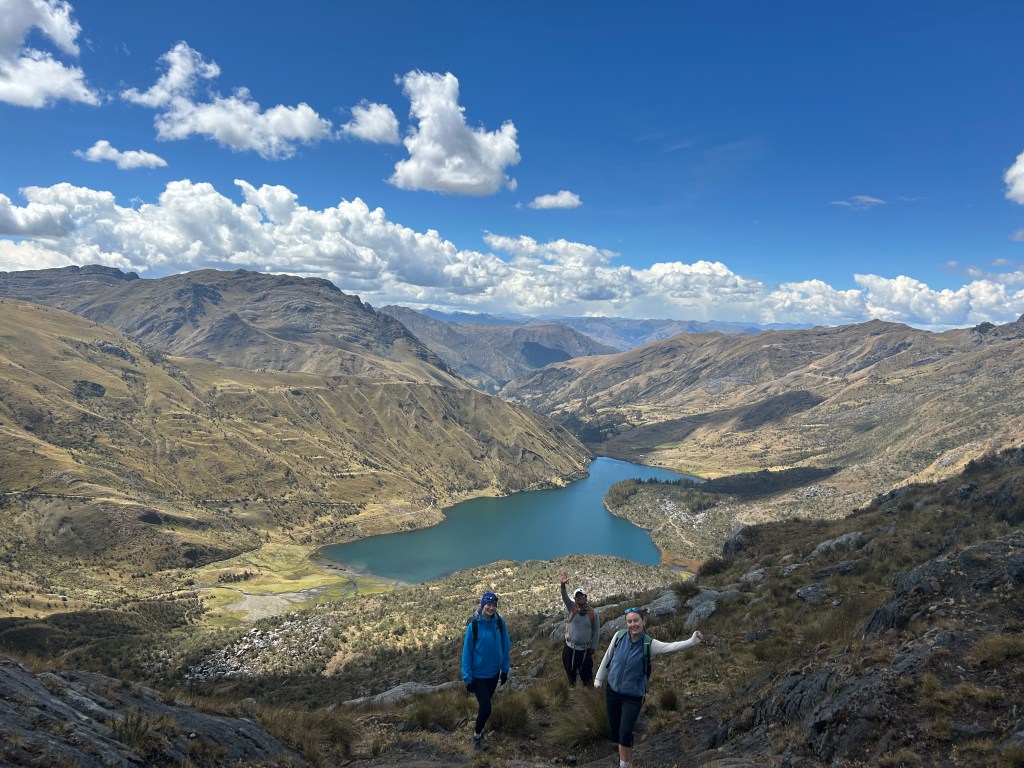
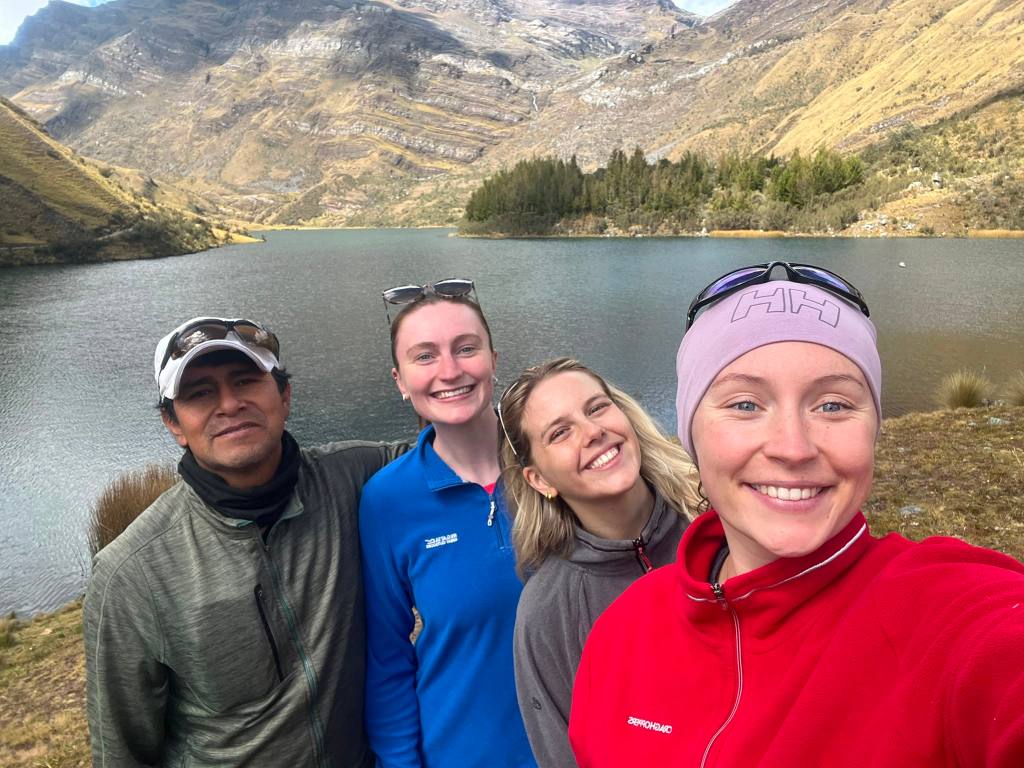
The area is one of the most beautiful I have ever had the privilege of seeing. A local village with vast fields used to farm crops or keep animals, such as pigs, chickens, sheep, donkeys and guinea pigs of course! The village is nestled at the foothills of breathtaking, snow capped mountains with pristine lakes and, if you’re lucky enough to see them, condors! We were fortunate enough to be with the brilliant Juan who took us on different hikes along various trails and explained the geography of the area and about the different people of the village in great detail. We were able to swim in the icy lake at the top of the valley before having a picnic with Juan which was an exciting day. Juan sees Quishar as a second home after many years of summers spent there, helping
medical students like the three of us. He was invaluable as a translator working between Quechua, Spanish and English during patient consultations, we were so grateful for his amazing help and talents. He also gave us Spanish lessons in the evenings, after starting as near beginners we were able to form basic conversation by the end of our trip!
Quishar is an astonishing place and somewhere I hope to return to in years to come. The three of us are so grateful to Val, Juan, Noemi and the whole team at LED for this special experience that we will never forget.
Thank you Anna, Annie and Seren all for all your hard work in Quisuar and the surrounding villages, and at the Hospital Víctor Ramos Guardia in Huaraz. We wish you all the best with your medical career.